Jim Davies: Pac-Man Art
In June and July, 2010, I had a show for my Pac-Man art at the Atomic Rooster in Ottawa. You can hear an interview about the show on MP3 here.
In the summer of 2001 I started working on a series of paintings based on Pac-Man. Specifically, the ghosts from the game and the culture they might have. Since I'm using imagery from popular culture, this series qualifies as pop art.
It was inspired by an encounter with a coin-op pac-man game in Seattle (If you would like to play Pac-Man, you can download one for windows.) It's in the ferry station to Bainbridge Island. I noticed that the ghosts had names (Shadow, Speedy, Bashful, and Pokey) as well as nicknames (Blinky, Pinky, Inky, Clyde.) How strange, I thought, that the ghosts are so well fleshed out. I mean, what's pac-man? He is a pac-man? Name is pac-man? What? Does he have a nickname? Well, he doesn't need one, since he's the only one. If no one talks to you, what on earth do you need a name for?
The only available conclusion I could come up with is that the ghosts use these names and nicknames. I made a picture showing this.
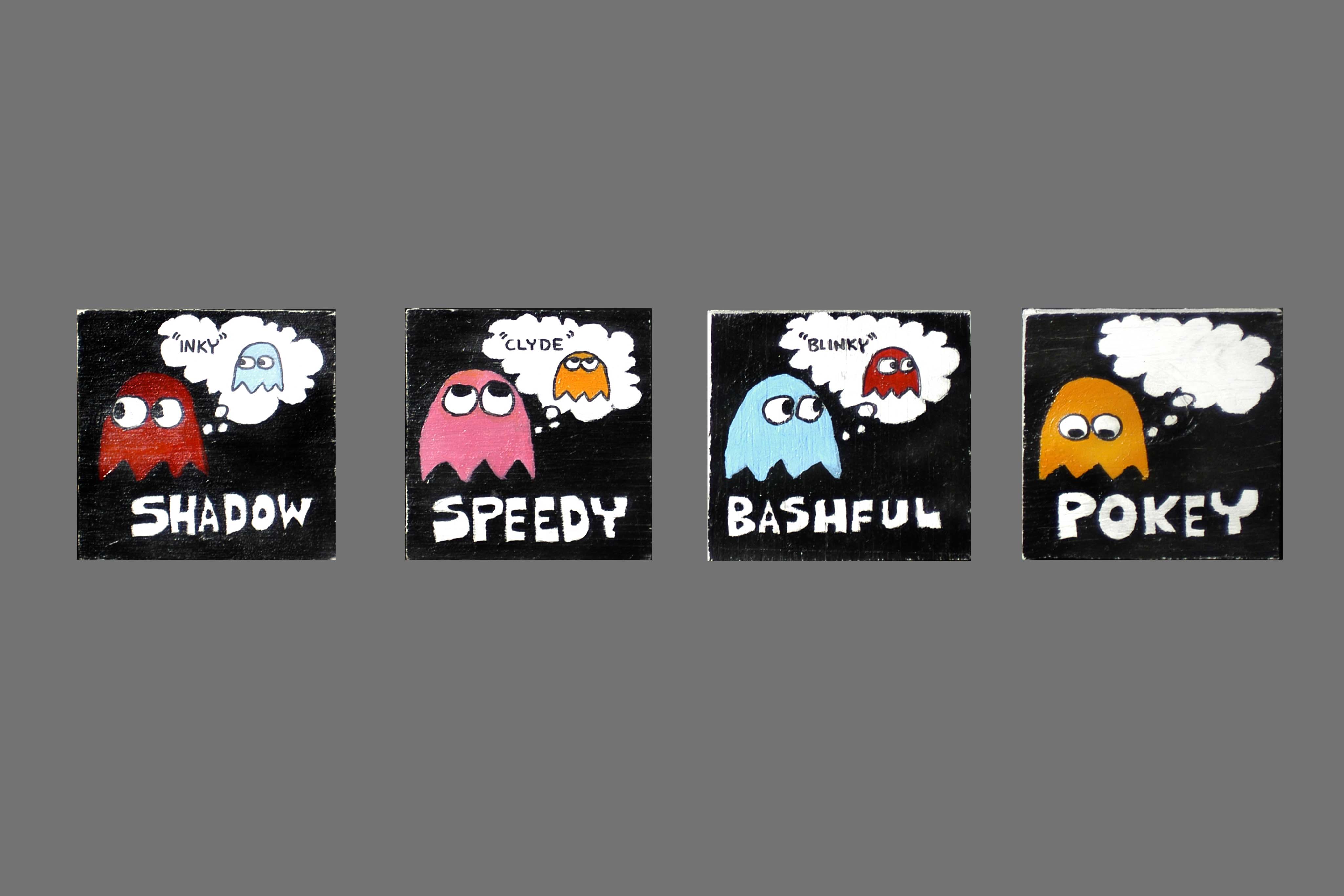
Ghost Culture by Jim Davies. Acrylic on wood blocks, 2001. SOLD
Each ghost has its name below, and is thinking of another ghost. Since the ghosts think of each other in terms of their nicknames, the nicknames are in the thought balloons as well. I like thought balloons in art.
Then I did a little websurfing and found that the ghosts behave differently. Actually, I've heard that Pac-man was the first game to have villians who didn't all act the same. Turns out that Pokey doesn't really even follow pac-man, he just does a predetermined route depending on where pac-man is on the screen. So Pokey's the dumb one. That's why, in Ghost Culture, each ghost is thinking of another ghost, except Pokey.
For an excellent description of the ghosts' behavior, see http://gameinternals.com/post/2072558330/understanding-pac-man-ghost-behavior. All known information about Pac-Man can be found at the Pac-Man Dossier.
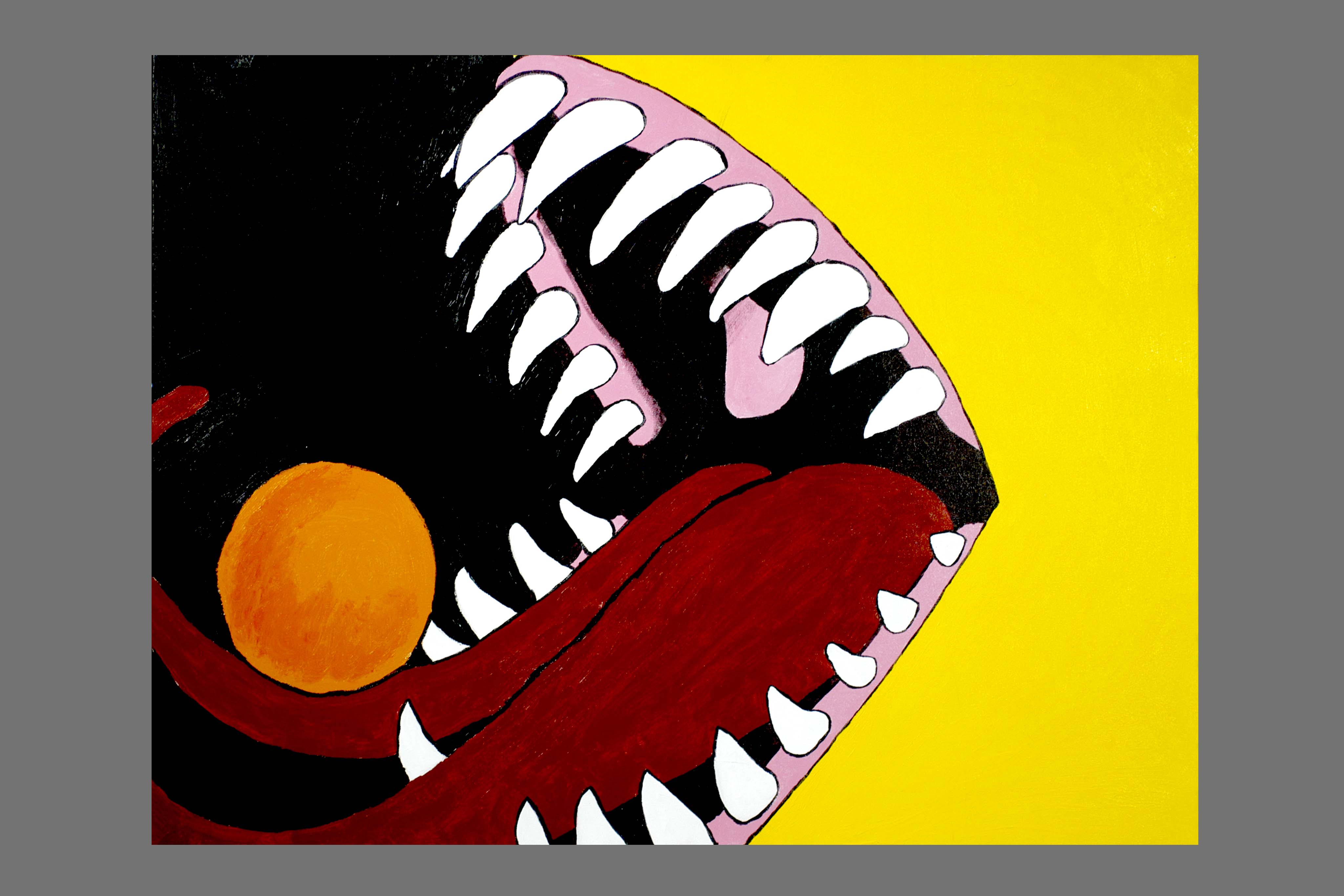
Demonizing Pac-Man by Jim Davies,
Acrylic on Canvas, 2001. SOLD
This is ghost propoganda. They want you to think of Pac-Man as an evil entity, so this poster portrays him in a terrible light, by giving him fangs and a forked tongue, which in reality he does not have. Note how much this image resembles Audrey II from Little Shop of Horrors. I didn't notice this til I was finished. I'm a big Audrey II fan. Sorry the picture didn't come out well. My digital camera wasn't so hot. This picture is sold as well, and I believe is hanging in a bookstore in Atlanta.
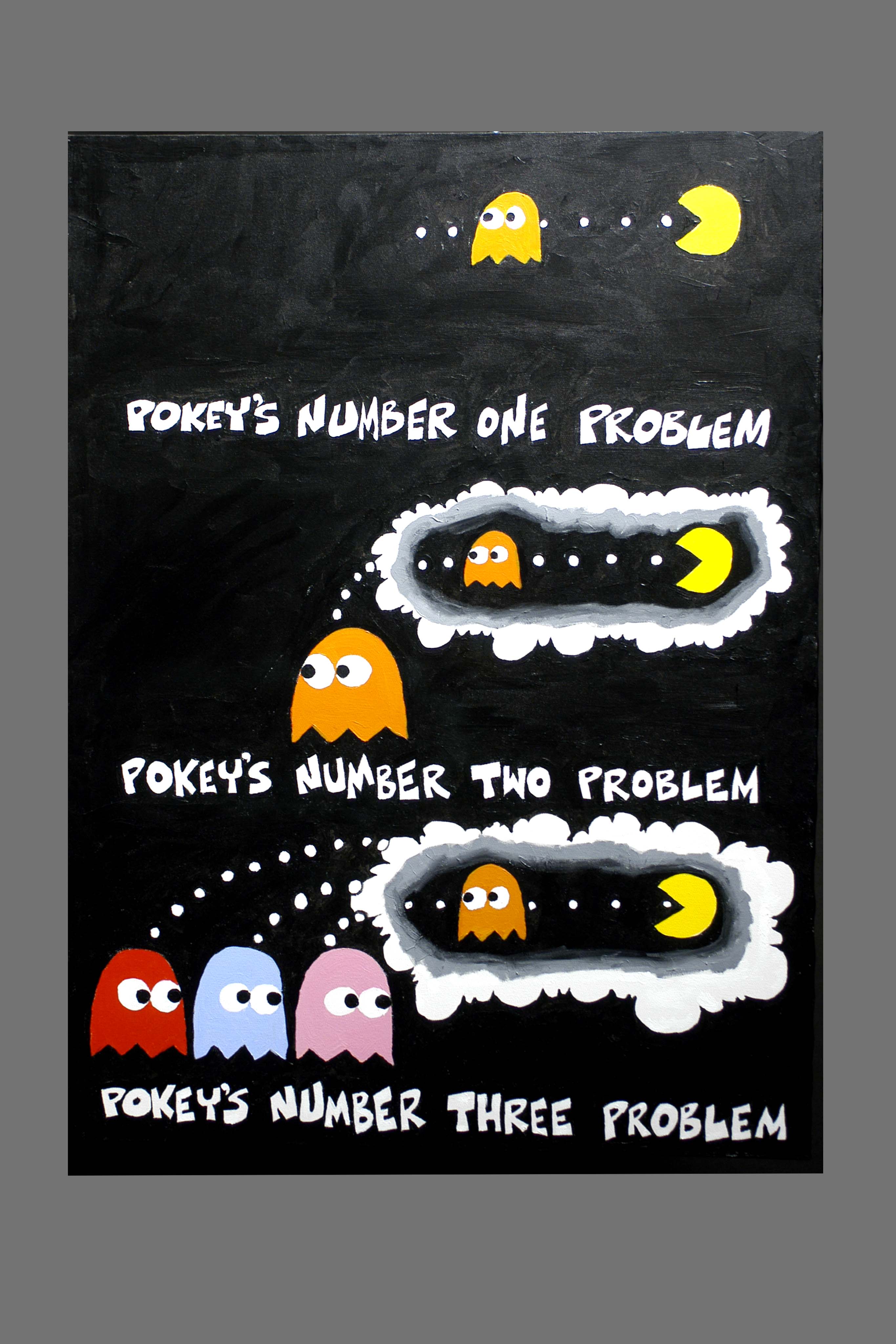
There are three parts to this image, corresponding to Pokey's three problems. The first is that he's going away from Pac-Man, when he should be chasing him. See Ghost Culture above for an explanation of why he might do this. In a still image the only way you can know this is because of the direction his eyes are facing. Ghosts always look where they are going. Pokey's number two problem is him thinking about going away from Pac-Man: His second problem is poor self esteem. His third problem is that everyone else knows he's a loser too.
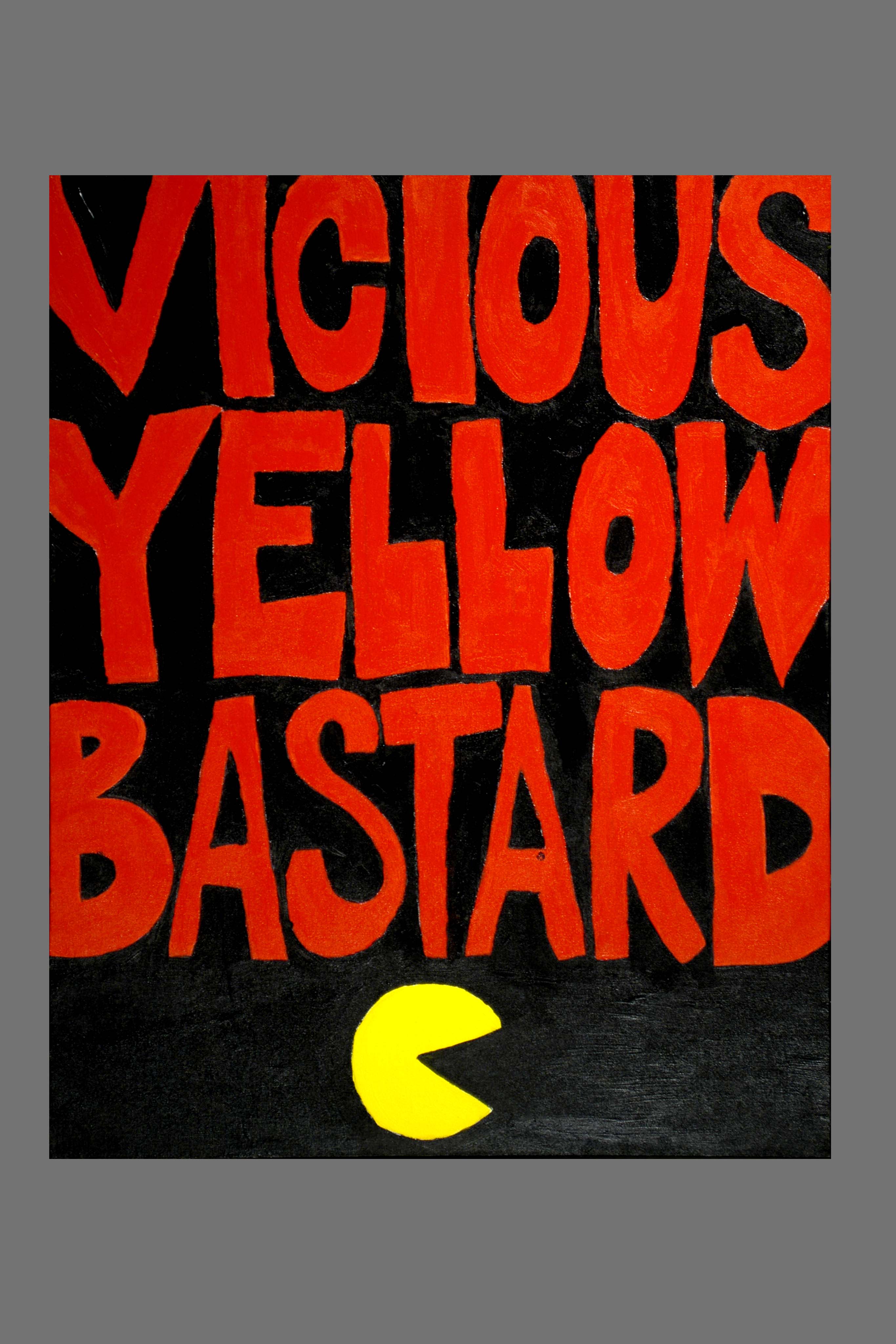
Here is a propaganda poster made by ghosts. They want you to hate Pac-Man.
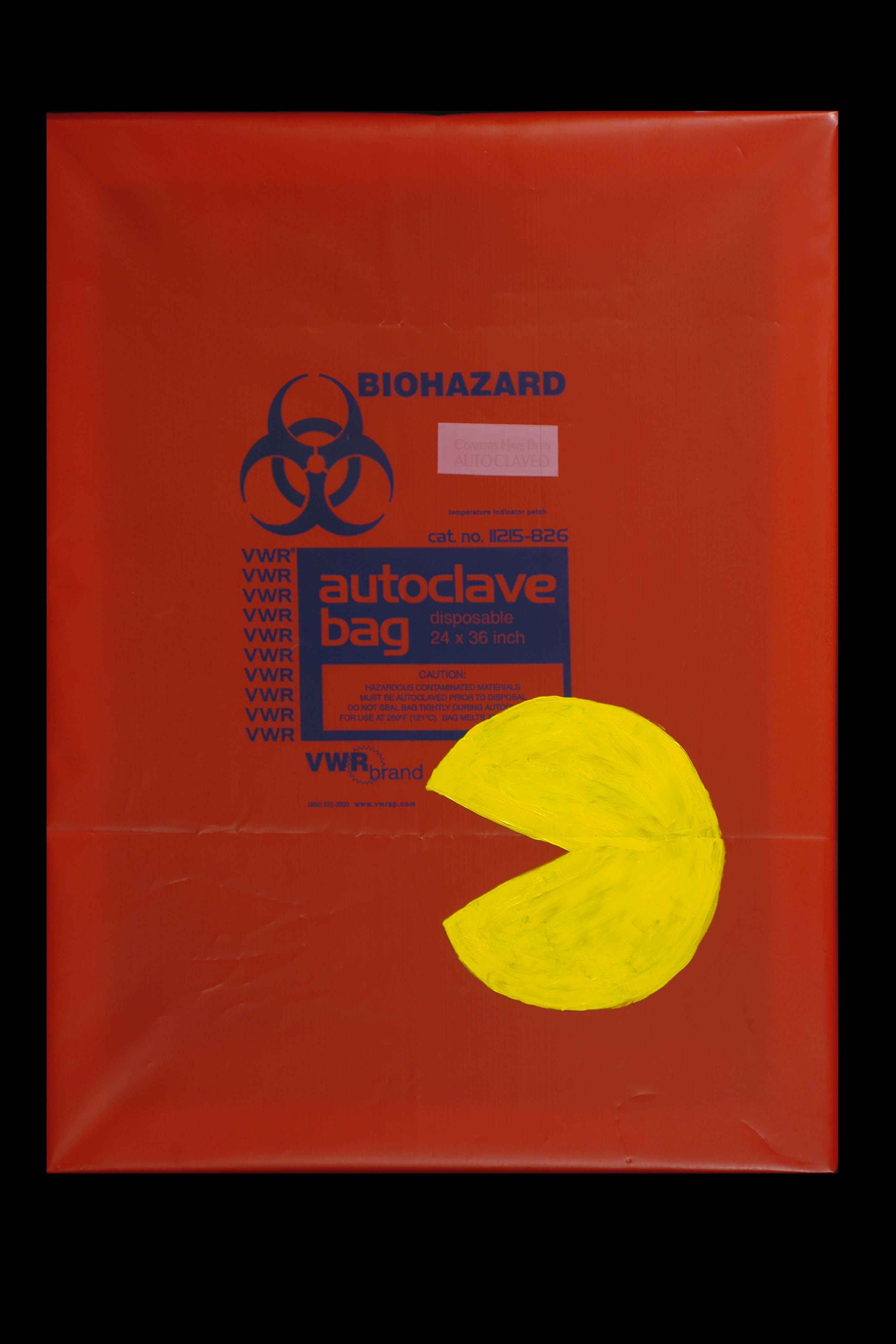
More ghost propoganda. They would really like it if you associated Pac-Man with biohazard. Those ghosts will stop at nothing, like Fox news.
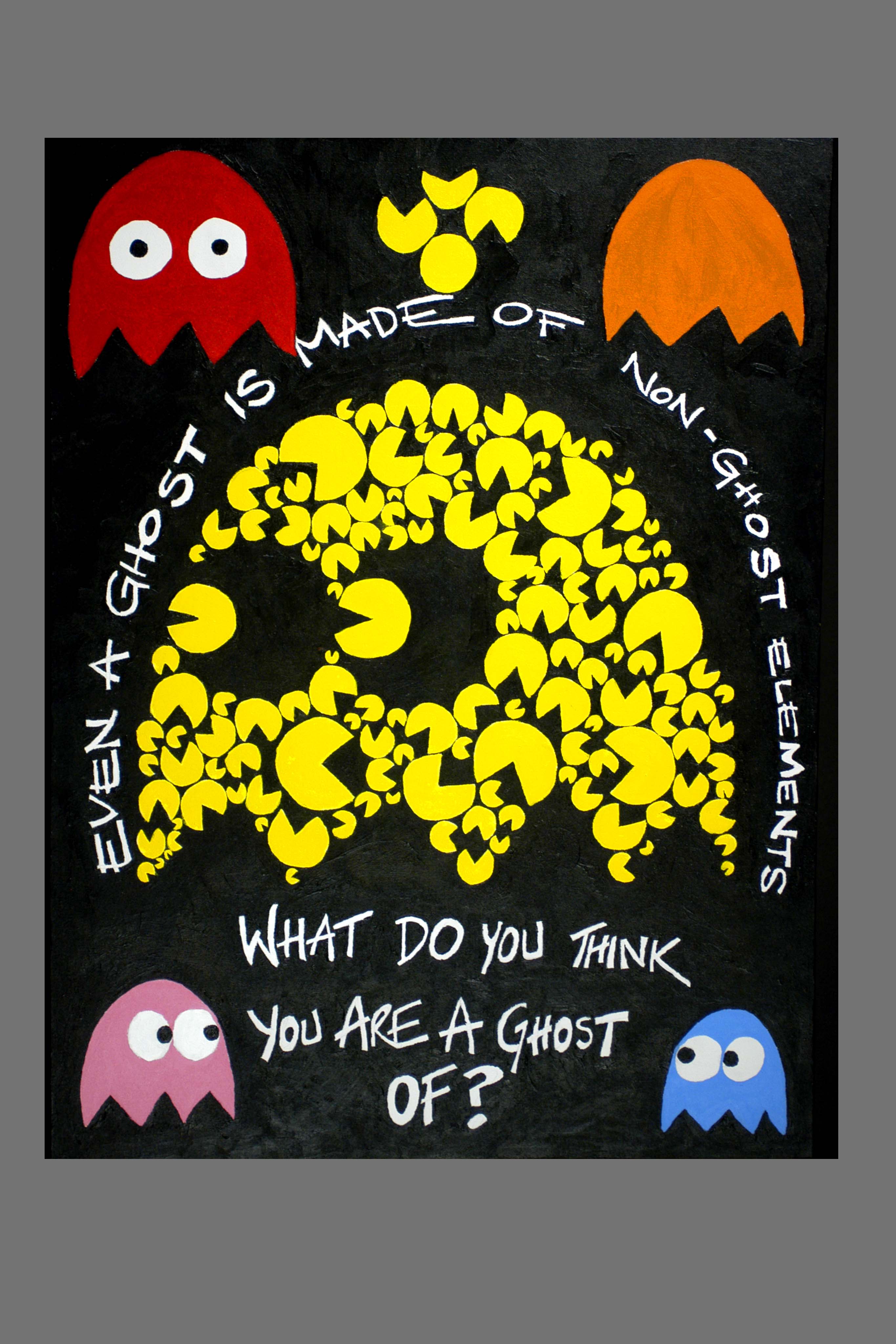
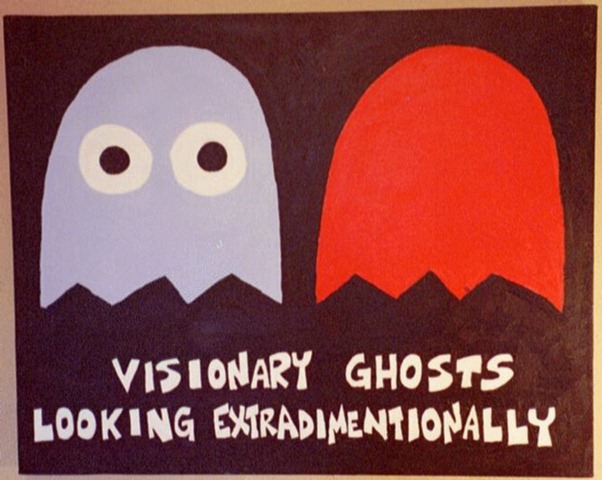
In contract to the propoganda paintings made my most ghosts, this was painted by a Buddhist ghost. The statement "Even a ghost is made of non-ghost elements" mirrors statements made by Zen master Thich Nhat Hanh. The picture depicts a ghost made of little pac-men to make the point. You know that really makes the other ghost's blood boil. "What do you think you are ghost of?" implies that they are ghosts of dead pac-men; an interesting thought. The structure of this painting mirrors that of a Tangka, with ghosts in the four corners. The two ghosts up top are looking extradimensionally (see below).
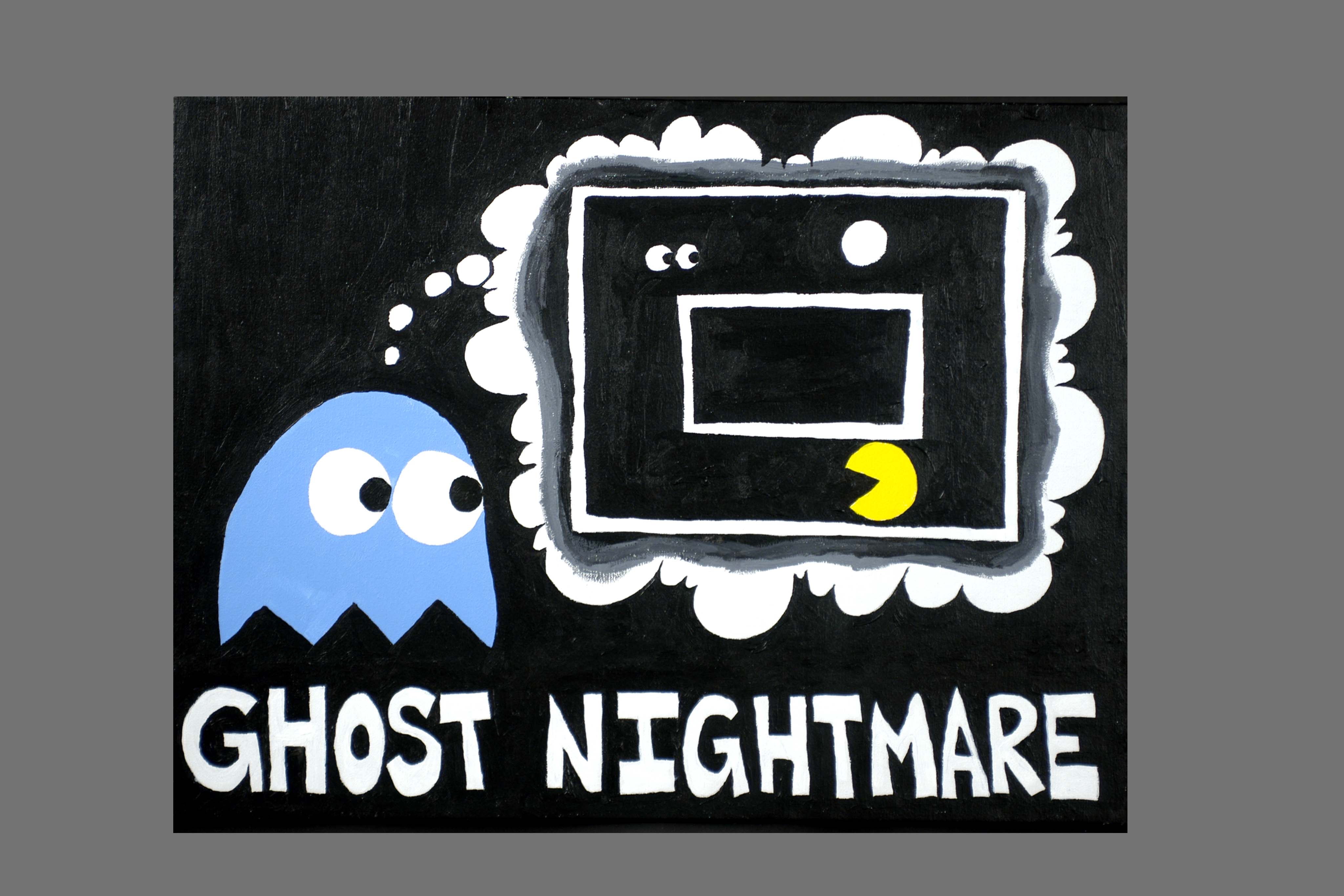
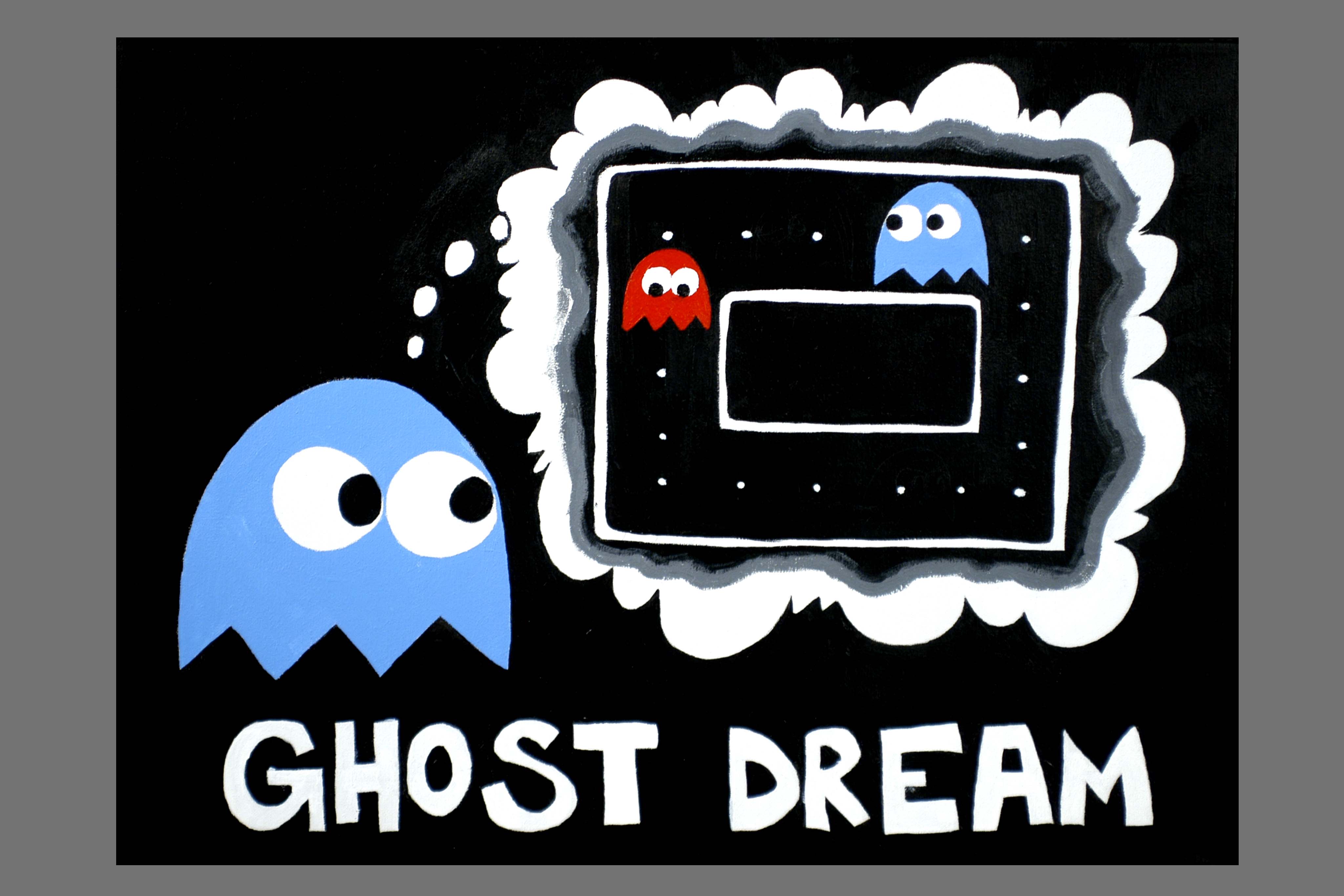
These paintings depict distopias and utopias for the ghosts.
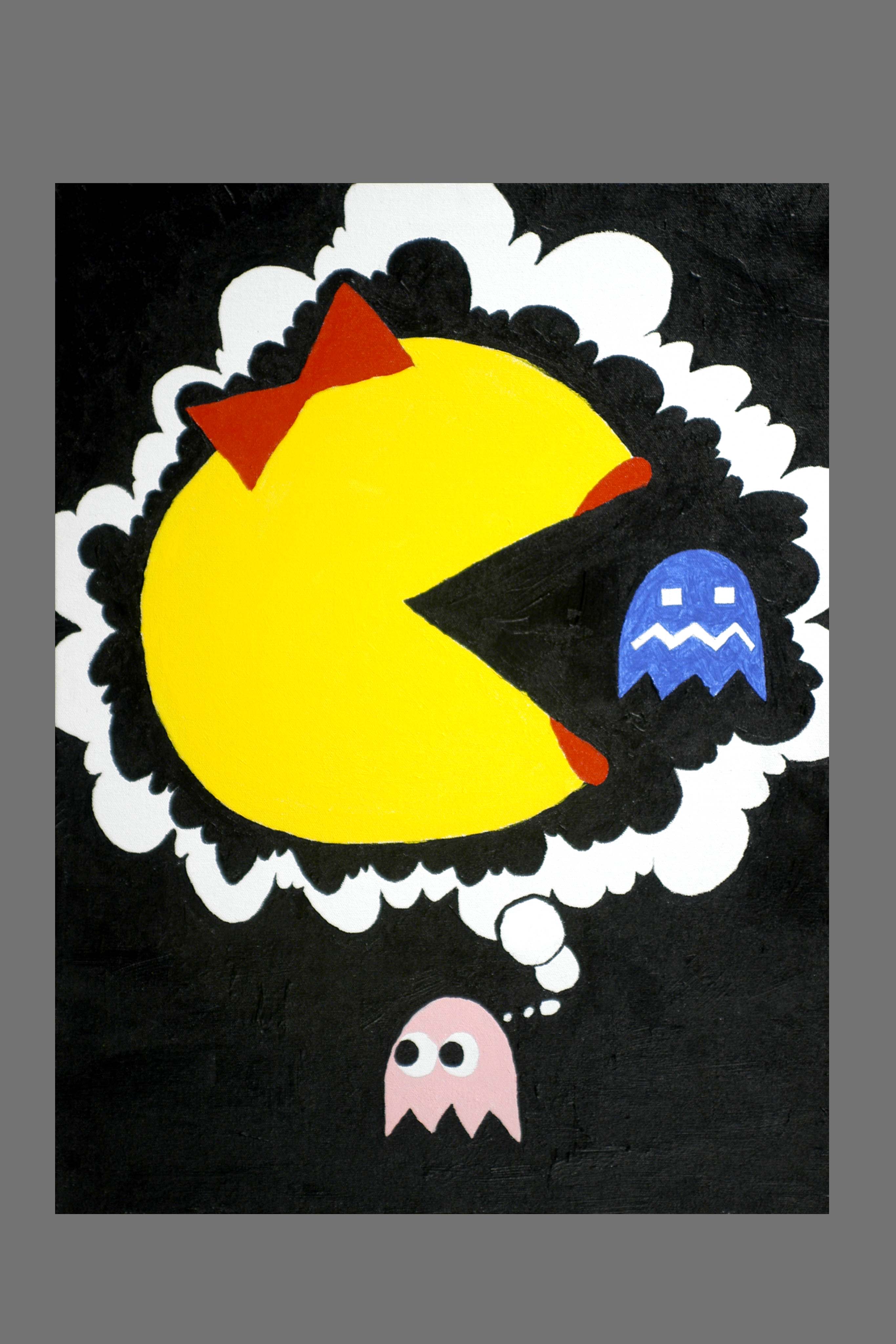
People kept telling me "you gotta do Ms. Pac Man!" I didn't like the idea because I wanted to keep it pure-- based on the original pac-man. If I was going to open the door to Ms. Pac Man, what was next, that dopey cartoon? Anyway, I thought: What is Ms. Pac Man to the ghosts of Pac-Man? Well, Ms. Pac-Man was not around as a game when Pac-Man came out. So Ms. Pac-Man would be, at best, an idea. And what do we call ideas regarding future technology? Science fiction. So Ms. Pac-Man is ghost science fiction, and like real science fiction, they get some things wrong: She's much too big (think attack of the 50 foot woman) and is missing her eye.
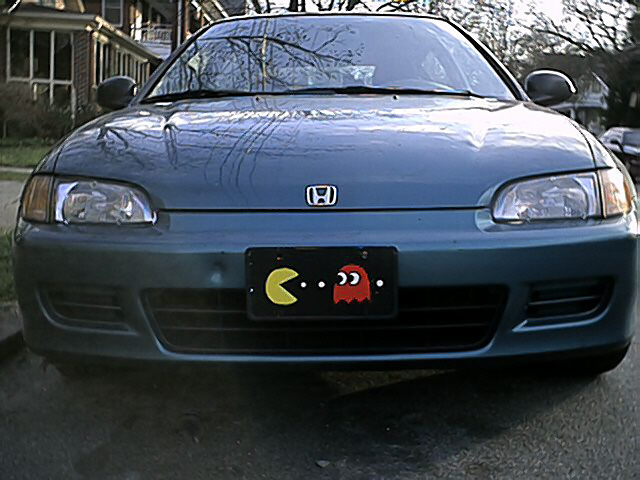
This represents a head-on collision between a ghost and Pac-Man, and is appropriate for the front of a car. Since there are no power pellets and Shadow is red, the ghost will win. So the image is of a confrontation that is bound to have a happy ending.
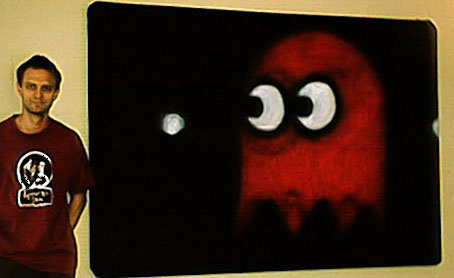
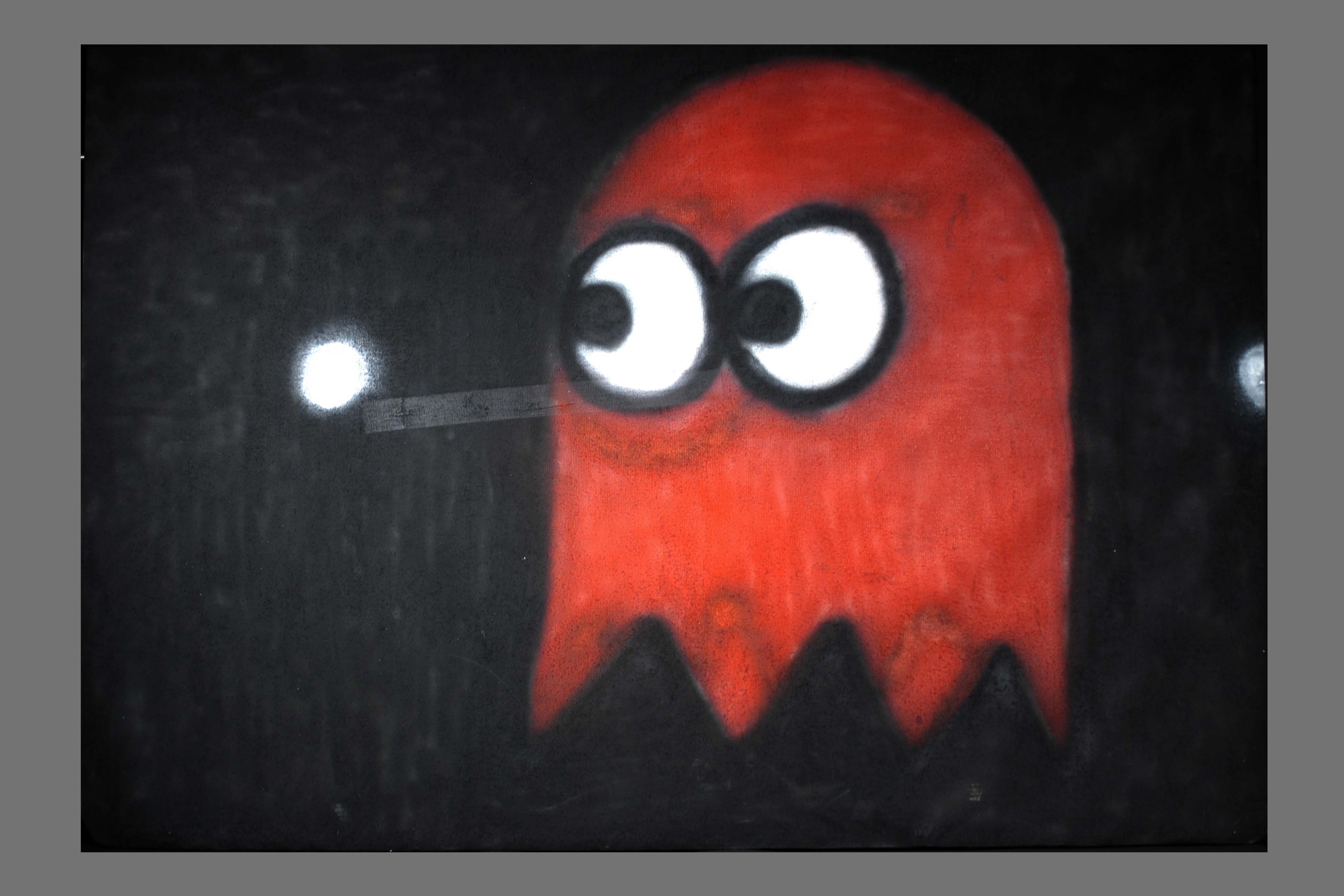
I put myself in the picture to show it's size. It's a big one. Shadow is the ghost hero. This image is glorifying him.
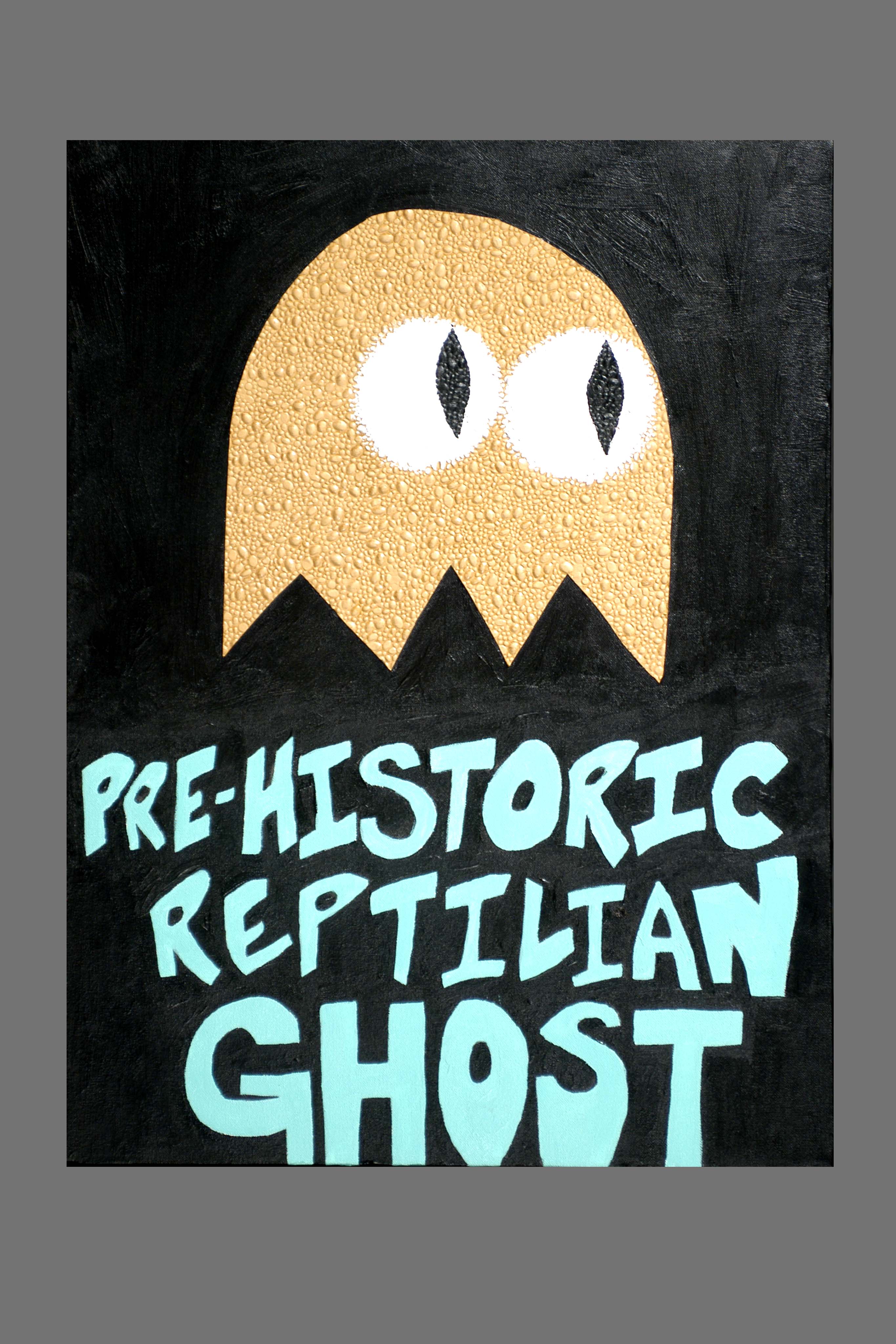
I found a piece of great bumpy paper and it inspired this piece. You need to see and feel it in person to get the effect.

This is a piece commissioned by Jason Brotherton. It's a work of tension. Who will reach the power dot first, Pac-Man or Blinky? It's the kind of thing ghosts would watch in action movies. It's about four feet long and about three inches high.
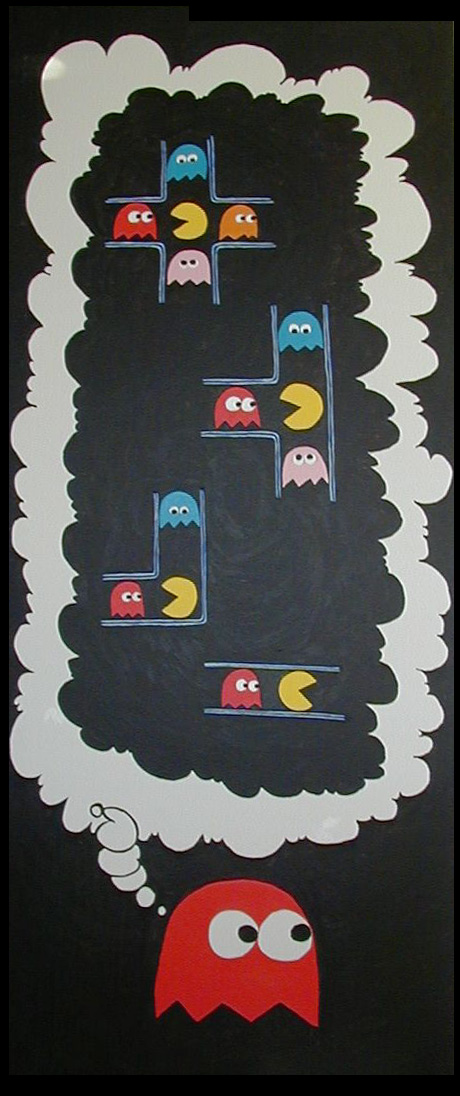
Ghost Plans by Jim Davies, acrylic on canvas, 2004.
Ghost Plans was commissioned by N. Matich. See the Ghost Plans webpage for intermediate photos and a description of what it means.
The series is complete. If you'd like to buy or commission one, email me.
Thanks for reading.